Quick Wins report excerpt.
This is what a small implementation engagement should leave behind: installed fixes, owner rules, measured value, and a clear decision about whether deeper work is justified.
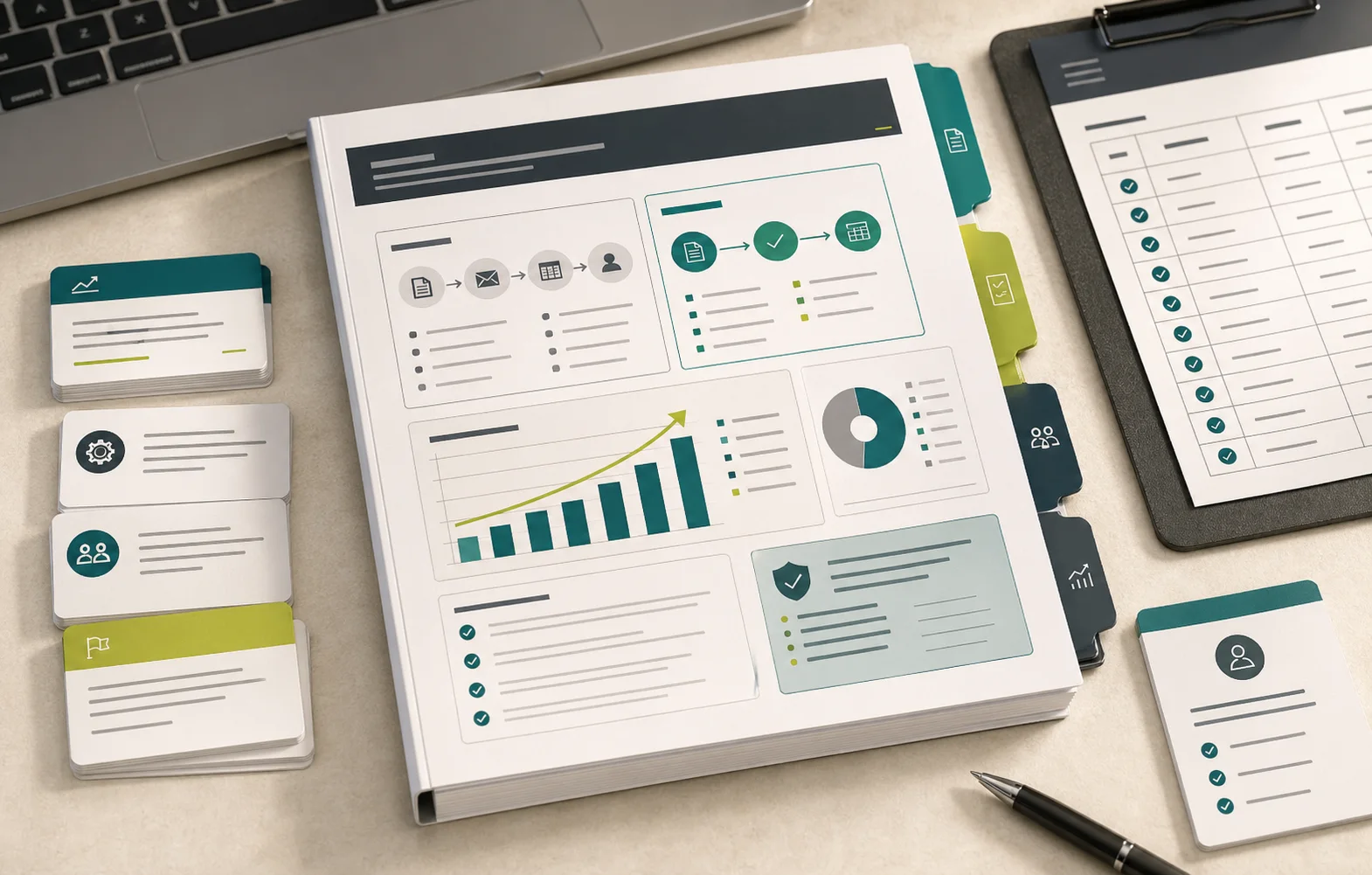
The report names exactly what changed.
Quick Wins is not a strategy memo. The buyer receives working changes, owner notes, and the boundaries that prevent a small fix from becoming unmanaged infrastructure.
Meeting-to-Action Capture
Action items lived in transcripts, Slack, and memory.
Every meeting creates a reviewed owner/date/action table.
Weekly Executive Ops Brief
Leaders rebuilt updates from five systems before Monday standup.
Approved source notes compile into a consistent weekly brief.
Invoice Exception Intake
Finance manually sorted vendor questions and missing fields.
Exceptions enter one queue with reason, owner, and review status.
Internal Policy Assistant
Managers answered repeated policy questions from old docs.
A scoped assistant cites approved policy files and escalates edge cases.
Four business days, one tight scope.
Selected safe fixes
Confirmed workflows, owners, data boundaries, approved tools, and what was out of scope.
Configured first workflows
Built meeting action format, executive brief shell, and exception intake structure with fake data.
Tested with owners
Ran real examples with owner review, corrected output formats, and documented failure modes.
Handoff and decision
Delivered the before/after note, owner checklist, maintenance rules, and Blueprint recommendation.
The handoff makes the fix maintainable.
Every installed fix includes a usage rule, review rule, failure mode, and escalation path. That is what separates a useful quick win from another shadow AI habit.
- →Do not let the meeting assistant assign tasks without human review.
- →Update the approved source folder before each weekly brief.
- →Keep invoice exception automation away from payment release decisions.
- →Review assistant failures every Friday for the first month.
- →Move to Blueprint before connecting CRM, finance, or customer-facing workflows.
The next recommendation was Blueprint.
The quick wins exposed a larger customer onboarding bottleneck with measurable cycle time, multiple systems, and enough risk to justify a proper diagnostic before building.
START WITH QUICK WINS